Electricity Prices in Latvia (2026)
Latvia's households paid €0.2415 per kWh in the first half of 2026, per Eurostat — 15% below the EU average, in line with its Baltic neighbours and helped by the Daugava's hydropower.
By the EnergyPrices Europe editorial team · Updated $1
Key numbers at a glance
| Latvia — household electricity | Price (EUR/kWh, taxes incl.) | Annual bill at 3,500 kWh |
|---|---|---|
| First half of 2026 | €0.2415 | €845.25 |
Per Eurostat (dataset nrg_pc_204), first half of 2026, consumption band 2,500–5,000 kWh a year (band DC), all taxes and levies included. EU average: €0.2832/kWh.
Electricity prices in Latvia: the numbers
Latvia lands at €0.2415 per kWh for households in the first half of 2026, per Eurostat — below the EU average of €0.2832 by 15% — the 15th highest of the 27 EU member states. The price fell 1% year on year (from €0.2440 in the first half of 2025). The table tracks the last three semesters:
| Period (band DC, taxes incl.) | EUR per kWh | Change |
|---|---|---|
| First half of 2025 | €0.2440 | — |
| Second half of 2025 | €0.2452 | +0.5% vs S1 |
| First half of 2026 | €0.2415 | -1.5% vs S2 · -1.0% YoY |
Per Eurostat, electricity prices for household consumers, dataset nrg_pc_204 (band DC = 2,500–5,000 kWh/year, all taxes and levies included). In Latvia, the price fell 1% year on year (from €0.2440 in the first half of 2025).
What the price is made of: energy, networks, taxes
| Component (2026-S1) | EUR per kWh | Share |
|---|---|---|
| Energy, supply and network (ex taxes) | €0.1991 | 82% |
| Taxes, levies and VAT | €0.0424 | 18% |
| Total (all-in) | €0.2415 | 100% |
The Eurostat figure is an all-in average: the energy component, network charges, levies and VAT together. In Latvia, taxes, levies and VAT made up 18% of the household price in 2026-S1 (the ex-tax price was €0.1991/kWh per Eurostat). Network costs in particular are set or approved by SPRK and change on regulatory cycles, not with the wholesale market.
Standing charges in Latvia
Latvian bills combine per-kWh energy and distribution pricing with a small monthly fixed fee (typically a few euros). Distribution tariffs differentiate by voltage and time; there is no large daily standing charge.
Typical annual electricity bill in Latvia
| Annual consumption | Approximate annual cost (all-in rate) |
|---|---|
| 2,500 kWh (low user) | €603.75 |
| 3,500 kWh (mid-range EU household) | €845.25 |
| 4,500 kWh (higher-use household) | €1,086.75 |
Computed at the all-in Eurostat rate of €0.2415/kWh (2026-S1); fixed fees are excluded — see the standing-charge section above. Typical households sit in band DC; district heating dominates Riga apartments, keeping electric heating a rural phenomenon.
What drives prices in Latvia
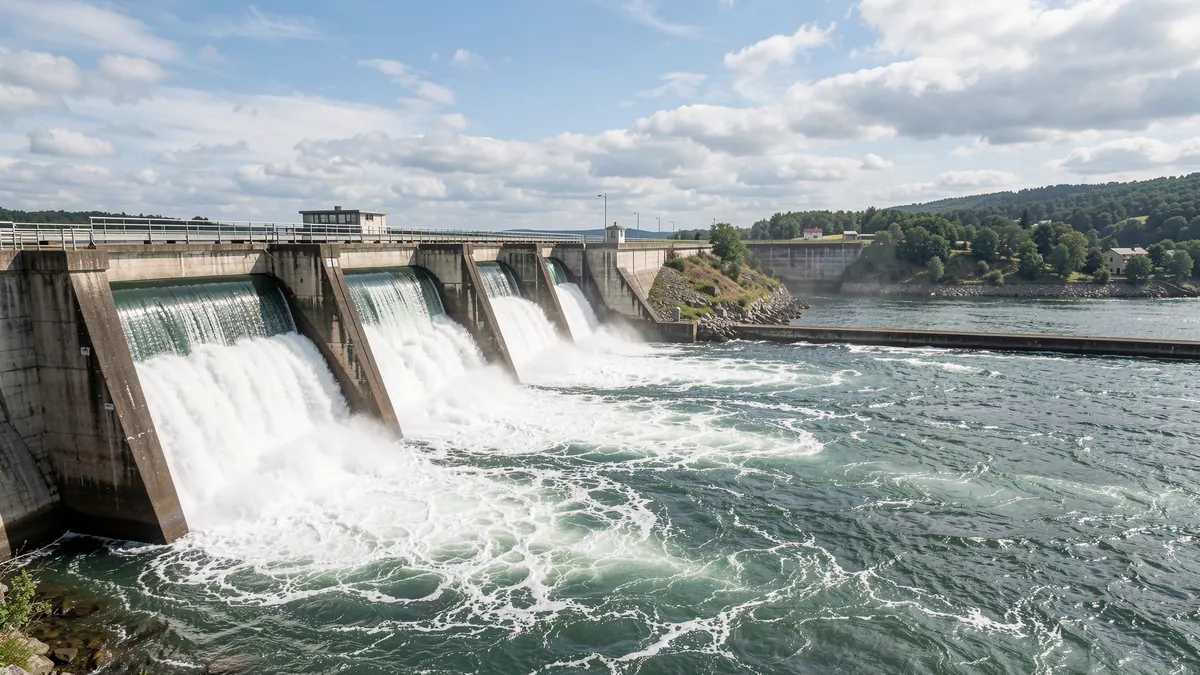
Generation mix. Latvia generates the majority of its electricity from renewables — 57.6% of consumption in 2025 (Eurostat, provisional), dominated by the Daugava river hydro cascade (Pļaviņas, Rīga, Ķegums) plus fast-growing onshore wind and biomass. Gas-fired units in Riga balance the system, and the February 2025 synchronisation with the Continental European grid connected Latvia firmly to Nordic and Polish markets after decades on the Russia-linked BRELL loop. On the numbers: renewables covered 57.6% of gross electricity consumption in 2025 (provisional), per Eurostat's renewable energy statistics.
Market structure and wholesale exposure. The market is liberalized, with Latvenergo the dominant supplier and the regulator SPRK supervising network tariffs. Baltic prices converge with the Nordic zone: Latvia's 2026-S1 price of €0.2415 sat just under the EU average, versus €0.2452 in 2025-S2. The ex-tax price of €0.1991/kWh against the all-in €0.2415 shows an 18% tax-and-levy share.
Taxes, levies and policy. Latvia subsidised bills during the 2022–2023 crisis with per-kWh support and cut network fees; those measures ended as prices normalised. VAT on electricity is 21% (reduced temporarily to 10% earlier in the crisis). Verify current tariffs with SPRK; low-income households access benefits through the municipality system.
Neighbouring markets tell the rest of the story: compare electricity prices in Lithuania and electricity prices in Estonia, or see the full European price comparison.
How to pay less for electricity in Latvia
Three levers move almost every European bill. First, tariff choice: check whether you are on a default, universal-service or legacy product, and compare it against current fixed and spot-linked offers — in markets like Latvia the spread between the cheapest and default tariff regularly runs 10–20%. Use SPRK's official comparison tool where one exists.
Second, consumption timing and efficiency: night or time-of-use tariffs, heat-pump and insulation upgrades, and shifting washing and EV charging off evening peaks cut bills without cutting comfort. Third, self-generation: rooftop solar pays back fastest in high-price markets — at €0.2415/kWh, every self-consumed kWh is worth roughly that much at retail. Verify support schemes and current tariffs with SPRK (sprk.gov.lv) before committing.
FAQ
What is the price of electricity in Latvia in 2026?
€0.2415 per kWh for a typical household in the first half of 2026, per Eurostat (dataset nrg_pc_204, consumption band 2,500–5,000 kWh a year, all taxes and levies included). That is the 15th highest of the 27 EU member states, 15% below the EU average of €0.2832.
What does the Eurostat household electricity price include?
Eurostat reports the all-in price per kWh: the energy component, network charges, renewable and policy levies, and VAT — averaged over households consuming 2,500–5,000 kWh a year (band DC), weighted to that country's actual consumption. It is the closest thing to a comparable household price across Europe, but your own bill will differ with tariff, region and consumption.
Is there a standing charge on electricity in Latvia?
Latvian bills combine per-kWh energy and distribution pricing with a small monthly fixed fee (typically a few euros). Distribution tariffs differentiate by voltage and time; there is no large daily standing charge. Where fixed fees exist, compare offers on total cost — energy per kWh plus fixed fee — not on the headline rate alone. SPRK publishes approved tariffs.
Why is electricity in Latvia cheap compared with the EU average?
Latvia generates the majority of its electricity from renewables — 57.6% of consumption in 2025 (Eurostat, provisional), dominated by the Daugava river hydro cascade (Pļaviņas, Rīga, Ķegums) plus fast-growing onshore wind and biomass. Gas-fired units in Riga balance the system, and the February 2025 synchronisation with the Continental European grid connected Latvia firmly to Nordic and Polish markets after decades on the Russia-linked BRELL loop. Latvia subsidised bills during the 2022–2023 crisis with per-kWh support and cut network fees; those measures ended as prices normalised. VAT on electricity is 21% (reduced temporarily to 10% earlier in the crisis). Verify current tariffs with SPRK; low-income households access benefits through the municipality system. The all-in price of €0.2415/kWh stands 15% below the EU average of €0.2832 (Eurostat, 2026-S1).
How much is a typical annual electricity bill in Latvia?
At the 2026-S1 Eurostat rate of €0.2415/kWh, a household using 3,500 kWh a year pays about €845.25 — roughly €579.60 to €1,014.30 across the 2,400–4,200 kWh range. Fixed fees are excluded; add them where they apply.
How can I reduce my electricity bill in Latvia?
Compare tariffs regularly (including fixed versus spot-linked products), switch heavy usage to cheaper time-of-use windows where available, invest in insulation or a heat pump if your heating is electric-resistive, and consider rooftop solar where regulation allows self-consumption or net metering. Verify current offers and schemes with SPRK.
Sources: Eurostat — Electricity price statistics and dataset nrg_pc_204; Eurostat renewable energy statistics; World Nuclear Association (2024); SPRK. Figures are period averages — always verify your own tariff with your supplier or SPRK. See the full European overview or our comparison of all 30 markets.