Electricity Prices in Bulgaria (2026)
Bulgaria has the third cheapest household electricity in the EU: €0.1341 per kWh in the first half of 2026, per Eurostat — less than half the EU average of €0.2832, kept low by regulated end-user prices and a heavy nuclear and hydro generation base.
By the EnergyPrices Europe editorial team · Updated $1
Key numbers at a glance
| Bulgaria — household electricity | Price (EUR/kWh, taxes incl.) | Annual bill at 3,500 kWh |
|---|---|---|
| First half of 2026 | €0.1341 | €469.35 |
Per Eurostat (dataset nrg_pc_204), first half of 2026, consumption band 2,500–5,000 kWh a year (band DC), all taxes and levies included. EU average: €0.2832/kWh.
Electricity prices in Bulgaria: the numbers
Bulgaria lands at €0.1341 per kWh for households in the first half of 2026, per Eurostat — below the EU average of €0.2832 by 53% — the 25th highest of the 27 EU member states. The price rose 3% year on year (from €0.1300 in the first half of 2025). The table tracks the last three semesters:
| Period (band DC, taxes incl.) | EUR per kWh | Change |
|---|---|---|
| First half of 2025 | €0.1300 | — |
| Second half of 2025 | €0.1355 | +4.2% vs S1 |
| First half of 2026 | €0.1341 | -1.0% vs S2 · +3.2% YoY |
Per Eurostat, electricity prices for household consumers, dataset nrg_pc_204 (band DC = 2,500–5,000 kWh/year, all taxes and levies included). In Bulgaria, the price rose 3% year on year (from €0.1300 in the first half of 2025).
What the price is made of: energy, networks, taxes
| Component (2026-S1) | EUR per kWh | Share |
|---|---|---|
| Energy, supply and network (ex taxes) | €0.1117 | 83% |
| Taxes, levies and VAT | €0.0224 | 17% |
| Total (all-in) | €0.1341 | 100% |
The Eurostat figure is an all-in average: the energy component, network charges, levies and VAT together. In Bulgaria, taxes, levies and VAT made up 17% of the household price in 2026-S1 (the ex-tax price was €0.1117/kWh per Eurostat). Network costs in particular are set or approved by KEVR and change on regulatory cycles, not with the wholesale market.
Standing charges in Bulgaria
Bulgarian bills are per kWh with a small monthly fee for metering and access to the grid (typically a few leva a month) — nothing like the UK's daily standing charge. Universal service tariffs bundle everything into the single regulated rate.
Typical annual electricity bill in Bulgaria
| Annual consumption | Approximate annual cost (all-in rate) |
|---|---|
| 2,500 kWh (low user) | €335.25 |
| 3,500 kWh (mid-range EU household) | €469.35 |
| 4,500 kWh (higher-use household) | €603.45 |
Computed at the all-in Eurostat rate of €0.1341/kWh (2026-S1); fixed fees are excluded — see the standing-charge section above. Band DC households (2,500–5,000 kWh) are typical; electric heating is common in apartment blocks with night-storage heaters, which lifts winter use.
What drives prices in Bulgaria
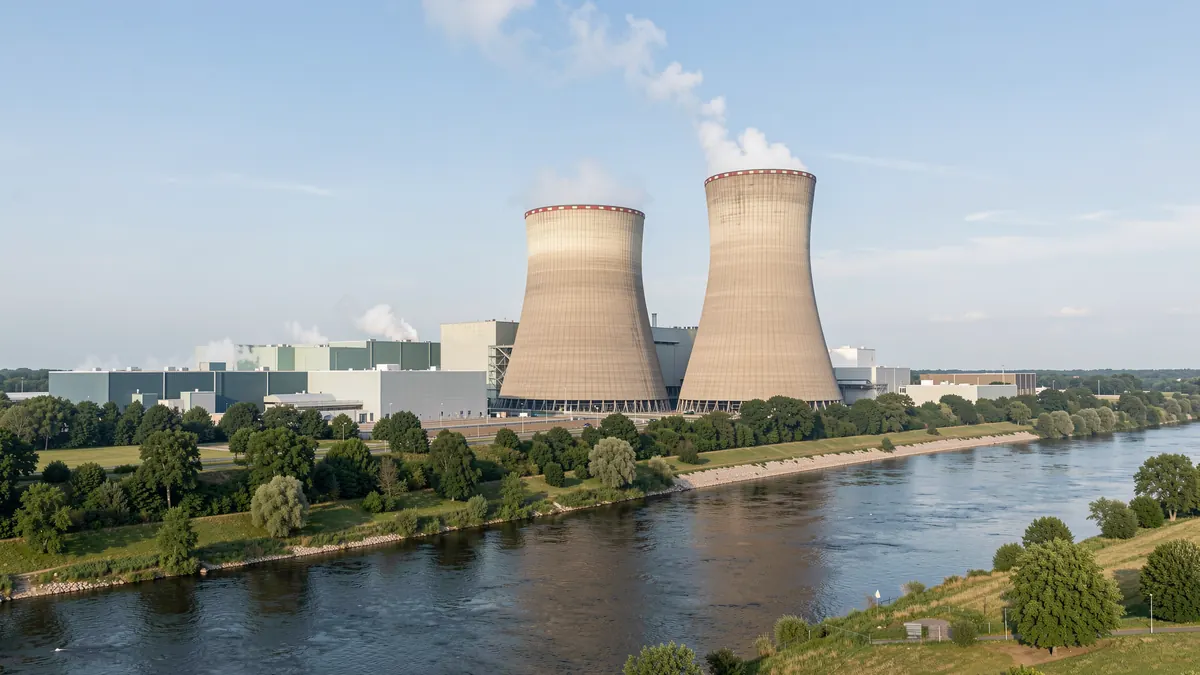
Generation mix. Roughly two-fifths of Bulgaria's electricity came from the two reactors at Kozloduy in 2024 (41.6% nuclear share, per the World Nuclear Association), with hydropower and declining coal from the Maritsa East lignite complex alongside. Renewables — mostly hydro and a fast-growing solar fleet — covered 34.4% of consumption in 2025 (Eurostat, provisional). Domestic generation usually exceeds consumption, keeping wholesale prices among Europe's lowest. On the numbers: renewables covered 34.4% of gross electricity consumption in 2025 (provisional), per Eurostat's renewable energy statistics; and nuclear supplied 41.6% of generation in 2024 per the World Nuclear Association.
Market structure and wholesale exposure. Households buy from a transitional regulated market — the energy regulator KEVR approves the final price pool that suppliers can offer household customers, and most stay on those contracts rather than the liberalized segment, which fully opens to households later in the decade. KEVR also caps grid tariffs. That regulatory floor is why Bulgaria's price barely moved across 2025–2026 while markets like Romania's jumped.
Taxes, levies and policy. The regulated household price sits below full cost-reflective levels, with the state absorbing the difference — effectively an embedded subsidy worth several hundred euro per household-year compared with neighboring market prices. VAT is levied at 20%, and taxes and levies made up about 17% of the Eurostat price in 2026-S1. Energy poverty support and a discount scheme for vulnerable households operate on top; verify current schemes with KEVR.
Neighbouring markets tell the rest of the story: compare electricity prices in Romania and electricity prices in Greece, or see the full European price comparison.
How to pay less for electricity in Bulgaria
Three levers move almost every European bill. First, tariff choice: check whether you are on a default, universal-service or legacy product, and compare it against current fixed and spot-linked offers — in markets like Bulgaria the spread between the cheapest and default tariff regularly runs 10–20%. Use KEVR's official comparison tool where one exists.
Second, consumption timing and efficiency: night or time-of-use tariffs, heat-pump and insulation upgrades, and shifting washing and EV charging off evening peaks cut bills without cutting comfort. Third, self-generation: rooftop solar pays back fastest in high-price markets — at €0.1341/kWh, every self-consumed kWh is worth roughly that much at retail. Verify support schemes and current tariffs with KEVR (dkevr.bg) before committing.
FAQ
What is the price of electricity in Bulgaria in 2026?
€0.1341 per kWh for a typical household in the first half of 2026, per Eurostat (dataset nrg_pc_204, consumption band 2,500–5,000 kWh a year, all taxes and levies included). That is the 25th highest of the 27 EU member states, 53% below the EU average of €0.2832.
What does the Eurostat household electricity price include?
Eurostat reports the all-in price per kWh: the energy component, network charges, renewable and policy levies, and VAT — averaged over households consuming 2,500–5,000 kWh a year (band DC), weighted to that country's actual consumption. It is the closest thing to a comparable household price across Europe, but your own bill will differ with tariff, region and consumption.
Is there a standing charge on electricity in Bulgaria?
Bulgarian bills are per kWh with a small monthly fee for metering and access to the grid (typically a few leva a month) — nothing like the UK's daily standing charge. Universal service tariffs bundle everything into the single regulated rate. Where fixed fees exist, compare offers on total cost — energy per kWh plus fixed fee — not on the headline rate alone. KEVR publishes approved tariffs.
Why is electricity in Bulgaria cheap compared with the EU average?
Roughly two-fifths of Bulgaria's electricity came from the two reactors at Kozloduy in 2024 (41.6% nuclear share, per the World Nuclear Association), with hydropower and declining coal from the Maritsa East lignite complex alongside. Renewables — mostly hydro and a fast-growing solar fleet — covered 34.4% of consumption in 2025 (Eurostat, provisional). Domestic generation usually exceeds consumption, keeping wholesale prices among Europe's lowest. The regulated household price sits below full cost-reflective levels, with the state absorbing the difference — effectively an embedded subsidy worth several hundred euro per household-year compared with neighboring market prices. VAT is levied at 20%, and taxes and levies made up about 17% of the Eurostat price in 2026-S1. Energy poverty support and a discount scheme for vulnerable households operate on top; verify current schemes with KEVR. The all-in price of €0.1341/kWh stands 53% below the EU average of €0.2832 (Eurostat, 2026-S1).
How much is a typical annual electricity bill in Bulgaria?
At the 2026-S1 Eurostat rate of €0.1341/kWh, a household using 3,500 kWh a year pays about €469.35 — roughly €321.84 to €563.22 across the 2,400–4,200 kWh range. Fixed fees are excluded; add them where they apply.
How can I reduce my electricity bill in Bulgaria?
Compare tariffs regularly (including fixed versus spot-linked products), switch heavy usage to cheaper time-of-use windows where available, invest in insulation or a heat pump if your heating is electric-resistive, and consider rooftop solar where regulation allows self-consumption or net metering. Verify current offers and schemes with KEVR.
Sources: Eurostat — Electricity price statistics and dataset nrg_pc_204; Eurostat renewable energy statistics; World Nuclear Association (2024); KEVR. Figures are period averages — always verify your own tariff with your supplier or KEVR. See the full European overview or our comparison of all 30 markets.